Vision Radiology

Careers · The practice

Medicine asa team sport.

We practice medicine as a team sport. The best radiologists know when another perspective adds value. More than 2,000 internal messages are exchanged during a typical shift—not because every case requires consultation, but because collaboration is part of the culture. When another perspective adds value, colleagues are only a message away.

Messages / night2,000+ internal
Second readsWhen a case calls
ColleaguesUp to 40 a shift
ConsultsPhysician-to-physician
01 · The virtual reading room

No Visionary reads alone.

For decades, radiologists have interpreted images from reading rooms far removed from the patient. In many ways, radiology has always been practiced at a distance. Technology changed where we read—not our responsibility to the patient or our connection to colleagues. At Vision, teleradiology isn't a departure from the practice of medicine. It's an evolution of it.

  • One shared Slack channel — when a case needs a subspecialty perspective, you reach out and the right colleague is minutes away.
  • Second reads on demand, treated as the norm rather than a favor.
  • When a conversation will improve patient care, our radiologists pick up the phone.
  • We use AI where it improves the practice of radiology. Today, that includes workflow triage, quality assurance, quality control, and selected processes within our PACS workflow. The goal is not to replace physician judgment, but to reduce unnecessary work so radiologists can spend more of their time focused on interpretation, consultation, and patient care.
In many ways, all radiology is teleradiology. Whether you're reading from a hospital basement or a home office, you're interpreting images captured somewhere else. What matters isn't where the radiologist sits. What matters is the quality of the interpretation, the collaboration behind it, and the care it supports.— Dr. Gautam Agrawal, Co-Founder
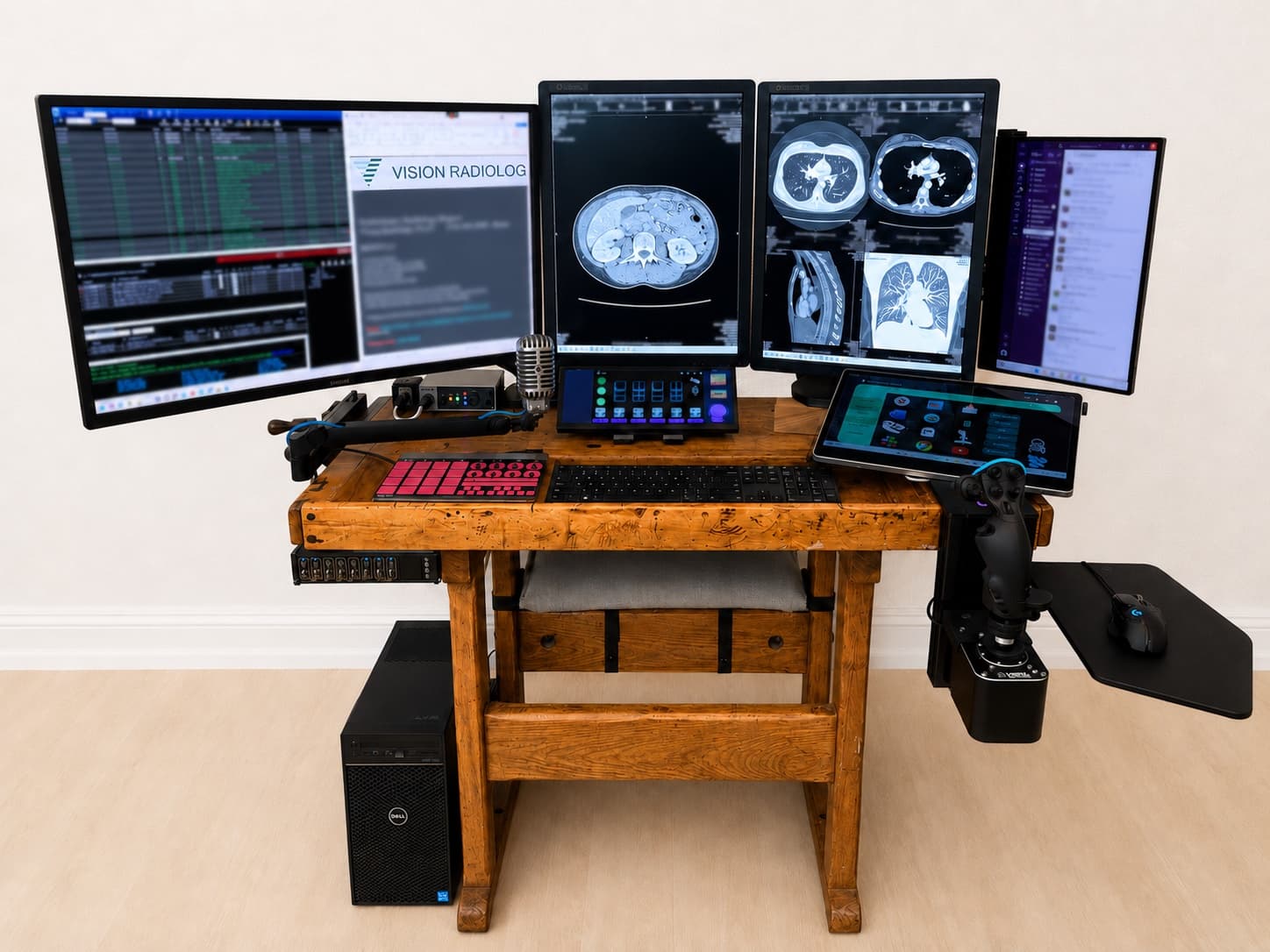
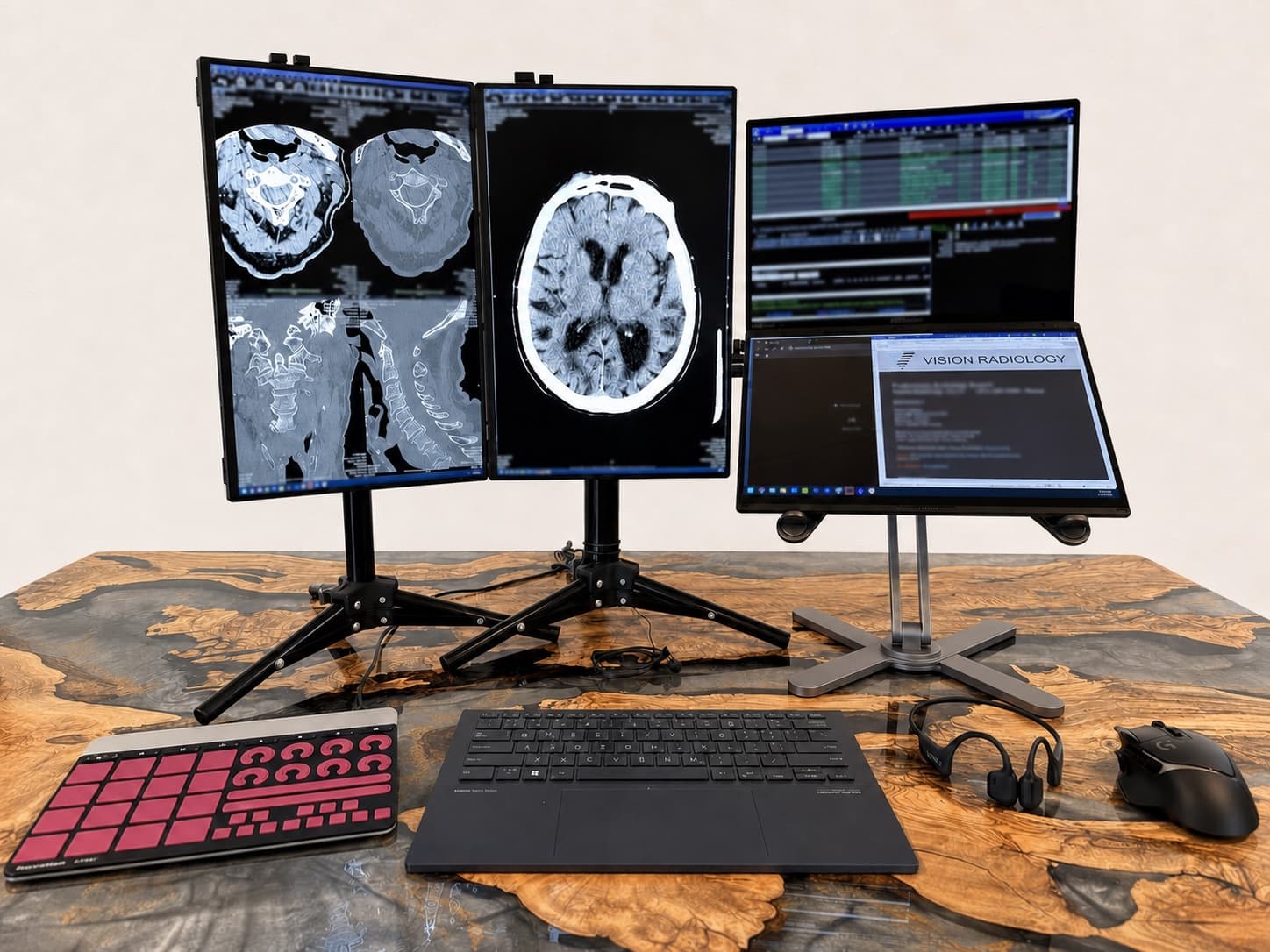
A Visionary reading workstation with multiple diagnostic monitors
A Visionary workstation — multi-monitor PACS and dictation.
The portable travel workstation Vision provides to traveling radiologists
The travel workstation — read from anywhere, without compromise.
02 · Collaboration in Motion

What collaboration actually looks like.

A neuroradiologist is interpreting a brain MRI when she notices an unexpected chest finding on the axial images. Rather than speculate, she reaches out to two colleagues in Vision's radiologist channel for another perspective. What follows takes just a few minutes — and it's exactly how medicine is practiced at Vision.

01

The question

The neuroradiologist tags two colleagues: “If you have bandwidth, can you help this neurorad with a chest finding?” The patient has a history of sarcoidosis, and she asks about soft tissue she’s seeing within the mediastinum.

02

The collaboration

A colleague joins within moments. Together they work the imaging — dark marrow signal on T1, a brain lesion that could be metastatic disease or sarcoidosis, mediastinal lymphadenopathy, and perilymphatic nodularity in the lungs. Along the way one jokes, “I just saw what study you were dictating” — a small sign of how closely Visionaries know and support one another.

03

The recommendation

They land on it together: ill-defined hilar and mediastinal soft tissue with basilar consolidations, likely secondary to the patient’s sarcoidosis. Recommend correlation with recent imaging — and if there’s nothing recent, a CT chest with contrast.

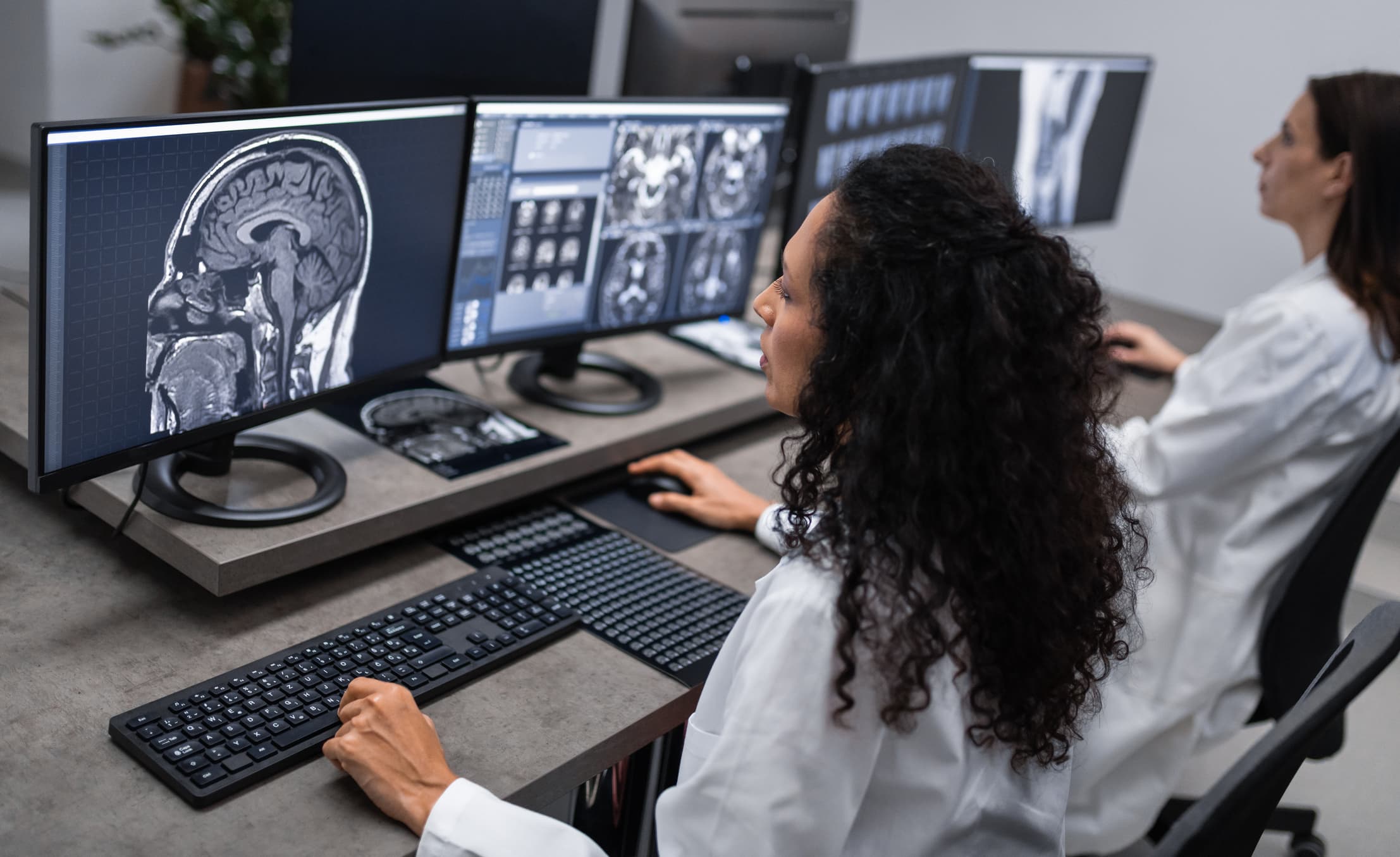
Two radiologists reviewing a study together
A second set of eyes, whenever a case calls for it.
03 · Why it's the point

Visionaries' collaborative approach.

At Vision, asking a colleague isn't viewed as uncertainty—it's good medicine. Whether it's a complex trauma study, an unexpected finding, or a nuanced subspecialty case, Visionaries readily consult colleagues in neuroradiology, chest, body, musculoskeletal imaging, and beyond. Collaboration isn't an interruption to the work—it is part of the work.

I started full shifts at Vision on July 1 and am loving it. The group is amazing — friendly, helpful, fun — and I'm pleased to find that I actually feel more connected to people while working at Vision than I did in the hospital. Go figure.— Dr. Ingrid Burger, Visionary
04 · FAQ

Questions about collaboration.

No. A typical overnight shift sees more than 2,000 internal messages, with Visionaries consulting up to twenty colleagues in real time. Our radiologists read across subspecialties and reach out for a second read whenever a case calls for it, and referring physicians are called directly.

Consulting a colleague for a second set of eyes is treated as the norm, not a favor. Everyone reads on one shared channel — when a case would benefit from a subspecialty perspective, you reach out and the right expert is minutes away. The infrastructure — Slack, CME, QA — exists to keep those consults friction-free.

Yes — directly. Vision encourages physician-to-physician communication for critical or unexpected findings through established escalation pathways.

No. The consult culture runs alongside structured worklists and industry-leading turnaround; it's what keeps Vision's discrepancy rate at 0.08%, below the industry average, without sacrificing speed.

Become a Visionary

A practice built for
sustainable careers.

Every decision we make begins with the patient and the physicians who depend on us. In an increasingly business-driven healthcare environment, we believe medicine should be guided by clinical judgment, compassion, and integrity—not volume targets or financial pressures.

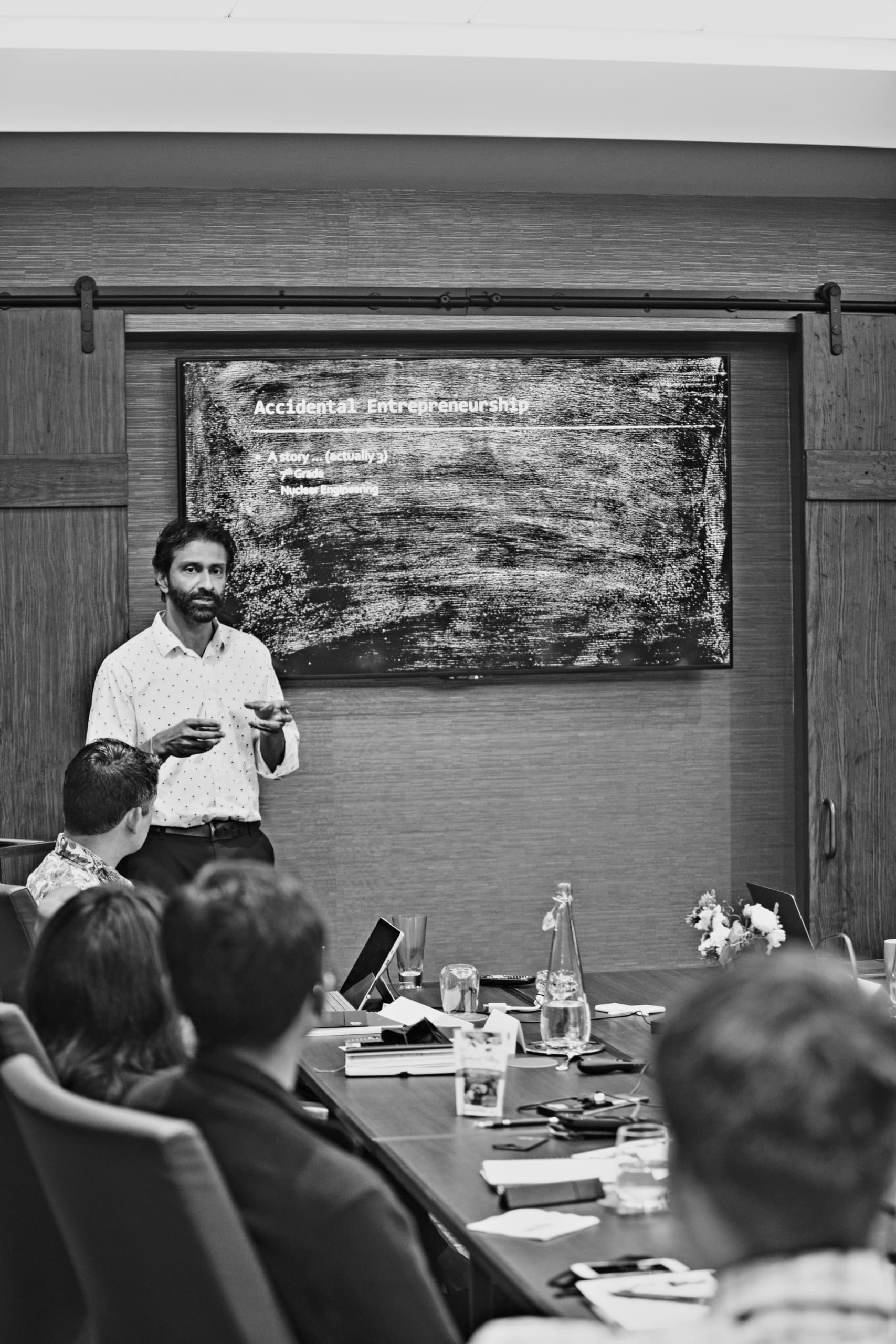
Visionaries together at a Vision Radiology retreat