If you're a radiologist weighing Vision, or a health system considering a partnership, these are the questions we get asked most — answered plainly.
Watch · with a co-founderPrefer to watch? Hear it from G.
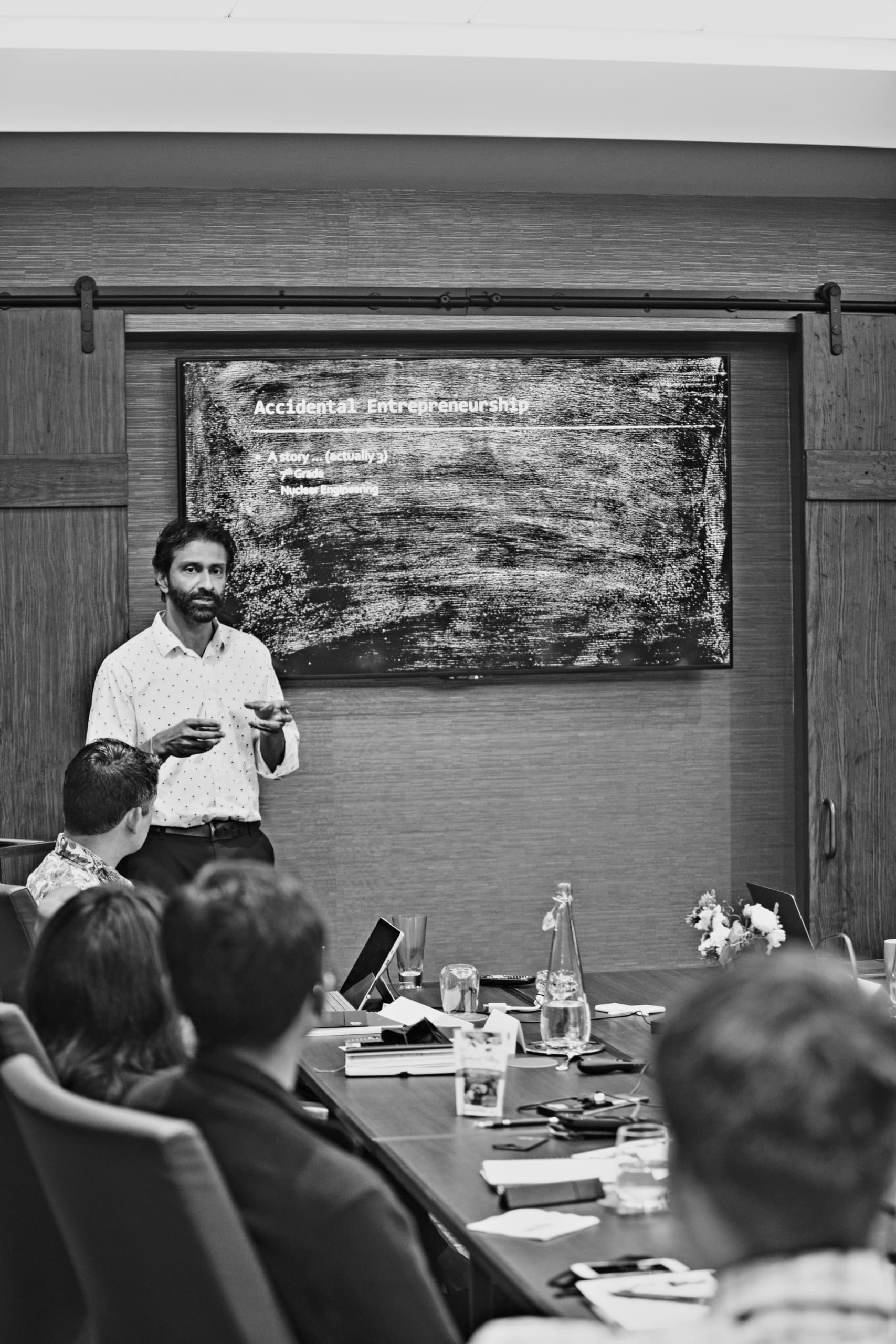
Co-founder Dr. Gautam Agrawal answers the questions radiologists ask most — 60–95 seconds each, with a written summary below so you can read or watch.
The questions we hear most often.
Vision Radiology was founded in 2003 by Johns Hopkins-trained radiologists Dr. Ray Hsu and Dr. Gautam Agrawal with a belief that continues to shape the practice today: great radiology is built on curiosity, collaboration, and an unwavering commitment to excellent patient care. More than two decades later, that philosophy continues to define who we are. Today, 100+ radiologists call Vision home, 98% of whom are subspecialty-trained. Many teach, mentor, lecture, and hold current or former academic appointments. But what defines Vision isn't where our physicians were trained or the titles they hold—it's how they practice together. Questions are encouraged. Consultation is routine. Challenging cases become shared discussions, and we believe curiosity advances medicine, and humility strengthens it.
Schedules at Vision are self-directed — radiologists help set their own hours rather than being assigned fixed shifts. We tailor coverage to each radiologist's needs and balance it across time zones, supported by thoughtful staffing that keeps flexibility from turning into unsustainable volume.
Vision includes outpatient subspecialty work, but we don't believe great radiologists should narrow their practice entirely. Reading across the breadth of diagnostic radiology keeps skills sharp, strengthens clinical judgment, and ultimately makes our physicians even better within their areas of expertise.
Onboarding is coordinated by dedicated teams across the practice. Physician Services manages licensing, credentialing, and hospital privileging. IT oversees equipment setup and technical readiness. People Operations handles benefits, perks, and new hire orientation. By the time you begin reading, you'll have both the administrative support and clinical connections needed to get started with confidence.
Physician-to-physician communication is an important part of radiology, but it's driven by clinical judgment. Vision encourages radiologists to consult directly with referring physicians whenever they believe a conversation will improve patient care. Our workflow is designed to give physicians the time and support to have those conversations when they matter.
No two shifts are exactly alike. Physicians work from a shared worklist, reading a broad mix of studies while consulting colleagues whenever another subspecialty perspective would benefit a case. Collaboration is part of the daily workflow, with more than 2,000 internal messages exchanged during a typical shift. Those conversations reflect a practice where questions are encouraged, expertise is shared, and patient care comes first.
Visionaries read from home, another city, or another country. The model is built for remote reading from virtually anywhere — while staying connected to colleagues and engaged in the practice.
Quality is structural, not episodic: a real peer-review process, a QA program whose lessons feed our internal CME conferences, and a rad-path correlation conference that closes the loop by comparing reads against pathology. Our discrepancy rate is 0.08% — below the industry average.
Transitioning into independent practice is a significant step. At Vision, questions are encouraged, consultation is routine, and experienced colleagues are readily available when another perspective is helpful. Many of our physicians have academic backgrounds and continue to teach and share their expertise through daily collaboration and biweekly CME conferences.
The myths about teleradiology, busted.
Not at Vision. Questions are encouraged. Consultation is routine. Complex cases are discussed. Learning remains part of the work. On a typical shift more than 2,000 internal messages are exchanged, with up to 40 colleagues a message away. The practice stays deeply human — the technology just lets us work remotely.
Constantly. There is one shared channel, a subspecialty colleague is a message away, and a second read is there whenever a case calls for it. The room is virtual, not absent — and referring physicians are called directly when findings matter.
We are in the practice of medicine, not the business of volume. Pace never comes before the read — thoughtful staffing keeps the worklist humane so quality stays first.
Cases don't disappear after the read. Our rad-path correlation conference closes the loop — comparing reads against pathology so the learning compounds.
No. Schedules are self-directed and reading is remote — flexibility designed to last a career, not burn one out. You help shape a schedule that fits your life.
No — that's historical. Critical and unexpected findings are communicated directly, per protocol: clearly, and to the right person, every time.
An academic approach doesn't mean it's all rare or complex cases. The day-to-day is balanced — community hospitals, regional centers, outpatient — with academic medical centers just a slice. Every case gets the same rigor.
Become a Visionary
Still have a question? Ask us directly.
A radiologist on our team reads every application — and every note. Write radiologistcareers@visionradiology.com.
Start your application